

Battery (ESS)
Store the power you make, use it when you'd otherwise be buying.
A battery keeps your solar, or cheap off-peak electricity, for later — so more of what you make is used at home instead of sold back cheaply. Whether it's worth it depends entirely on how your home uses power, and that's the first thing we work out from your real data.
Fixed price · No same-day signature · Hertfordshire
What a battery actually does
It moves your electricity to when you need it
Solar makes the most power in the middle of the day, which is often when a house is quietest. Without somewhere to put it, the surplus goes back to the grid — and you're paid far less for a unit than it costs to buy one back in the evening.
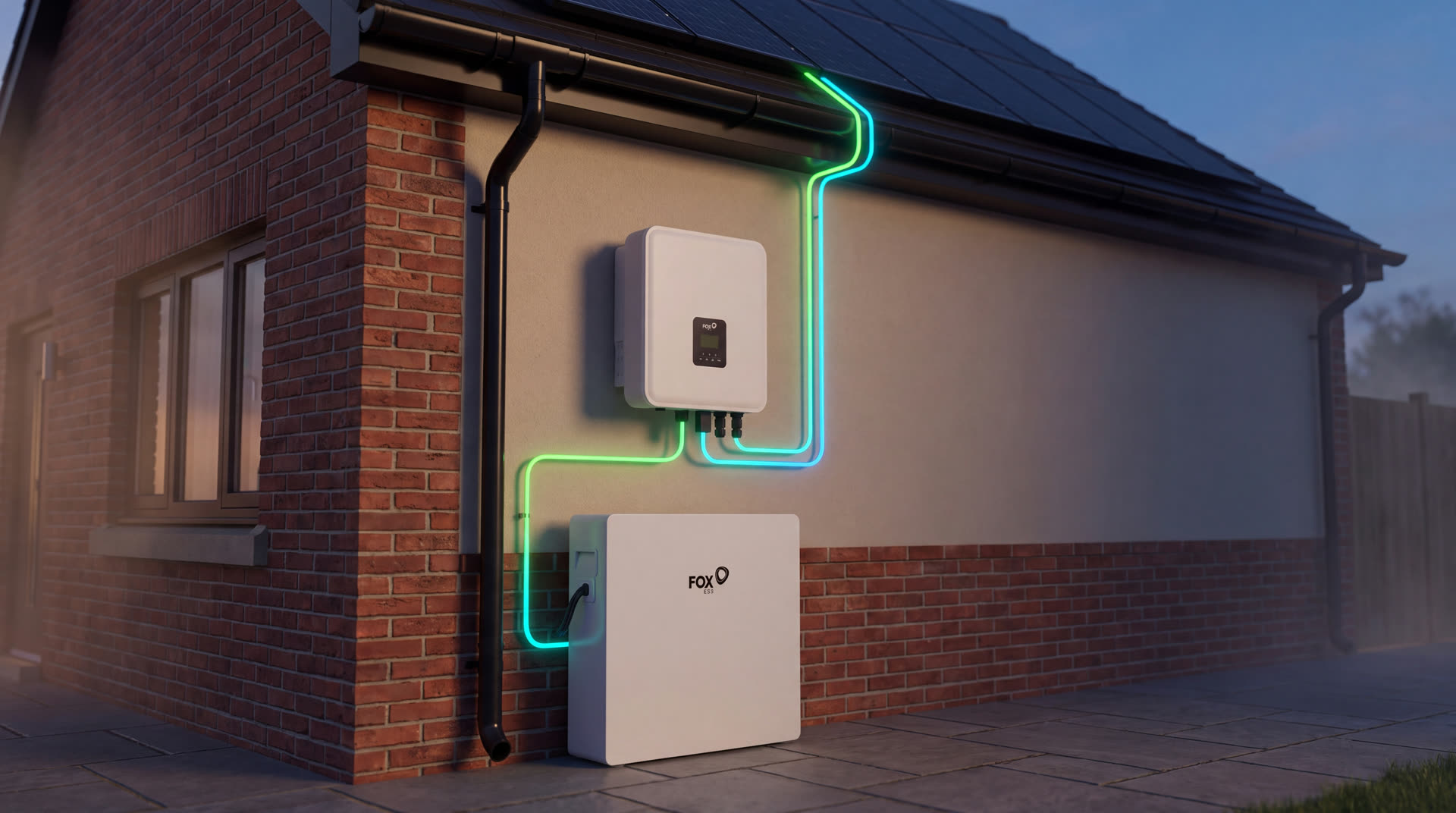
A battery closes that gap. It stores the power your panels make while you're out, then feeds it back into the house when everyone's home and the kettle's on. If you're on a tariff with cheap off-peak hours, it can also charge overnight and cover the day. Either way, the point is the same: use more of your own cheaper power, buy less at peak prices.
(home battery, Hertfordshire utility room)
The batteries we fit
Modular Fox ESS & Sigenergy storage
We fit proven modular LFP storage from Fox ESS and Sigenergy — stacked to the capacity your home actually needs, and easy to add to later. The right size comes from your load shape, not a round number.
See all the kit we fit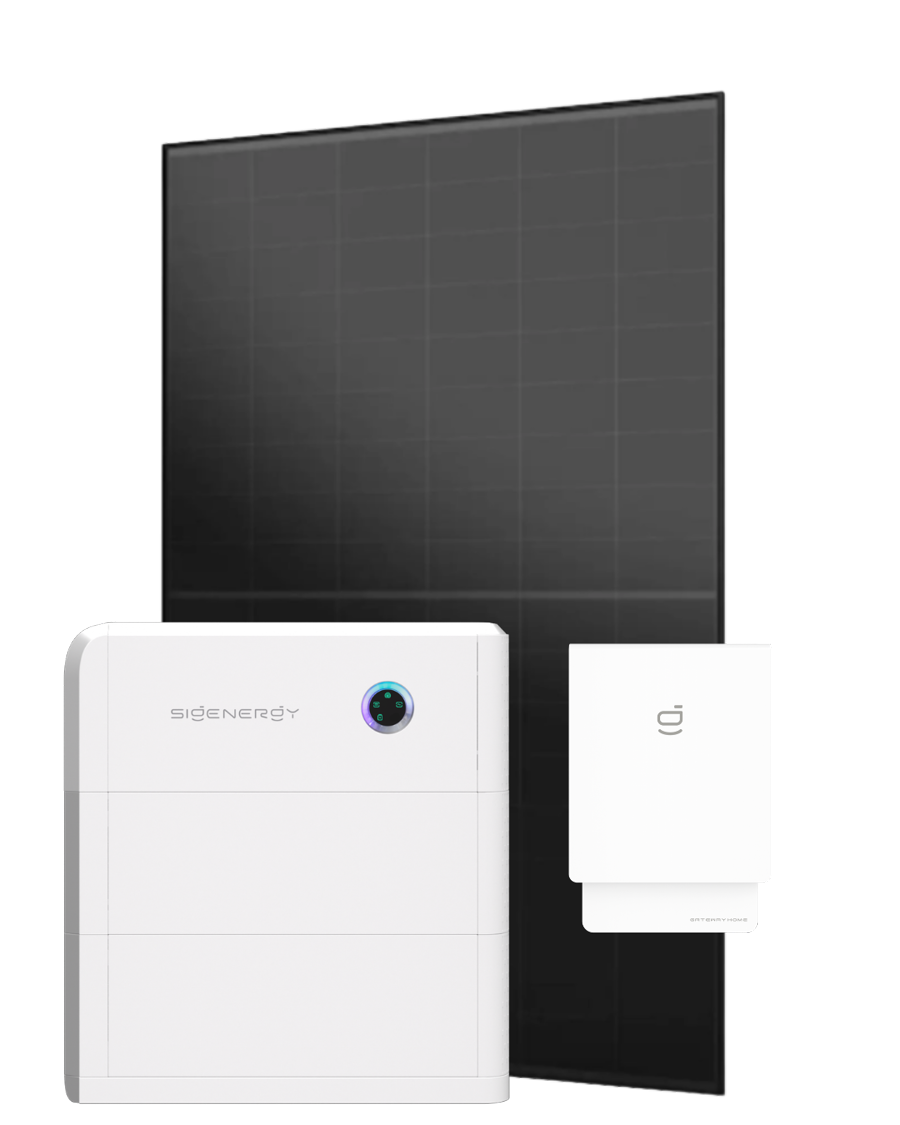
Why sizing matters
The right battery is the one that matches your day
A battery that's too small misses the surplus it should be catching. One that's too big sits half empty and never earns its keep. The correct size comes from your load shape, not a round number off a brochure.
We read your load shape
Your half-hourly data shows when you actually use power — the evenings, the overnight base load, the pattern a battery has to fit.
We size the storage to it
Big enough to soak up the surplus you'd otherwise export, not so big that capacity sits idle. The right figure, with the working shown.
We tell you the real payback
A genuine payback figure from your own numbers — and if a battery doesn't stack up for your home, we say so plainly.
The honest bit
A battery isn't always worth it
For some homes a battery is the piece that makes everything add up — plenty of daytime surplus, high evening use, or a tariff that rewards shifting power to off-peak hours. For others, the sums are thinner, and the money is better spent elsewhere or not at all.
We'd rather tell you that up front than sell you a box that never pays for itself. The free analysis is where we find out, and the answer is genuinely allowed to be "not for you, not yet".
If someone quotes you a battery without first looking at when you actually use power, they're guessing. The size only means something once it's matched to your day.
How we do it
Done properly, and itemised in full
You see exactly what you're paying for — the battery, the fitting, the lot — no vague "system price" hiding the detail.
- A free analysis of your real data before anything is quoted
- A survey and design with a specialist — around your home, not a template
- A battery and inverter specified to suit how you use power
- A fixed, itemised quote that doesn't move once issued
- Tidy installation, done to the standard we'd want at home
- Monitoring and an annual review so it keeps performing
Start with your own numbers
Find out whether a battery is worth it for you
A free analysis of your half-hourly data gives you real figures and a genuine payback — and an honest answer either way — before you commit to anything.
Get your free analysisFrom the blog
Straight talk on home energy
Why we start with your half-hourly data, not your annual bill
Your annual kWh hides the one thing that decides what system you actually need: the shape of how you use power.
28 July 2026 · 4 min read BatteriesIs a home battery actually worth it? The honest answer
For some homes a battery is the piece that makes everything add up. For others the sums are thinner. Here's how to tell which you are.
21 July 2026 · 5 min read Heat pumpsHeat pump myths, and what's actually true
“They don't work in cold weather.” “You need underfloor heating.” “They're always cheaper to run.” Let's sort the myths from the facts.
14 July 2026 · 6 min readStart with your own numbers